Introduction to the World of Electromagnetism
The world of science is full of fascinating phenomena. Among these, electromagnetism stands out as a cornerstone of modern technology. Many students and hobbyists ask how to make an electromagnet for their projects. It is a perfect entry point into the study of physics. An electromagnet is a type of magnet in which the magnetic field is produced by an electric current. Unlike a permanent magnet, you can turn it on and off. This feature makes it incredibly versatile for various applications.
Consequently, understanding its mechanics is essential for any aspiring engineer. The basic principle is surprisingly simple. You need a source of electricity and a conductor. When electricity flows through a wire, it creates a magnetic field around it. By coiling the wire, you strengthen this field. Furthermore, adding a ferromagnetic core amplifies the effect significantly. This article will guide you through the entire process. We will cover the materials, the steps, and the science behind it. Additionally, we will explore ways to boost its power. By the end, you will have a solid grasp of electromagnetic principles. Therefore, let us dive into the exciting world of magnets.
The Fundamental Science Behind the Force
To master the creation of an electromagnet, you must understand the science. Electricity and magnetism are closely related forces. In fact, they are two aspects of a single force called electromagnetism. When electrons move through a wire, they create a magnetic field. This field is circular and surrounds the wire. However, the field from a straight wire is relatively weak. Therefore, we need to concentrate it. Coiling the wire into a solenoid achieves this concentration.
Inside the coil, the magnetic lines of force become parallel and strong. Consequently, the magnetic intensity increases dramatically. This explains why the coiling step is so vital. Furthermore, the material inside the coil matters. Air is a poor conductor of magnetic flux. Iron, on the other hand, is excellent. It has high magnetic permeability. This means it easily aligns its internal domains with the magnetic field. Thus, an iron core concentrates the magnetic flux. This makes the electromagnet much stronger than an air-core coil. Understanding these concepts helps you troubleshoot your device. If your magnet is weak, you know where to look. Perhaps the current is too low. Or maybe the core material is insufficient. Consequently, a theoretical understanding leads to practical success.
Gathering the Essential Materials for Your Project
Before you start building, you need the right materials. Fortunately, the list is short and affordable. First, you need a power source. A D-cell battery is a common choice for beginners. It provides a steady 1.5 volts and lasts a reasonable time. For stronger magnets, some people use lantern batteries. However, avoid car batteries or wall outlets. They provide too much current and are dangerous. Second, you need insulated copper wire. Magnet wire is the best option. It has a thin enamel coating that acts as insulation.
Consequently, you can pack the turns tightly without short circuits. If you cannot find magnet wire, use thin plastic-insulated wire. Just ensure the insulation is intact. Third, you need a ferromagnetic core. A large iron nail is the standard choice. It should be made of soft iron. Soft iron loses its magnetism quickly when the current stops. This is ideal for an electromagnet. Steel nails often stay magnetized. Therefore, they are less suitable for switching applications. Additionally, you need sandpaper or a wire stripper. You must remove the insulation from the wire ends. Finally, have some paper clips ready for testing. Gather these items on a clean workspace. Preparation makes the construction process smooth and enjoyable.
Step-by-Step Guide on How to Make an Electromagnet
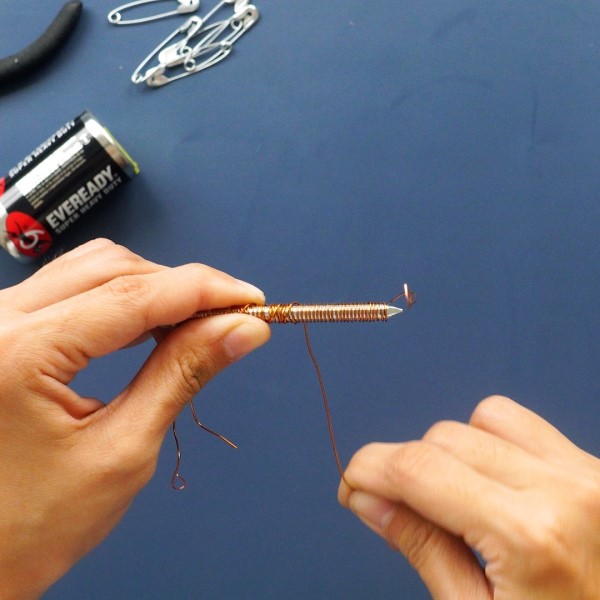
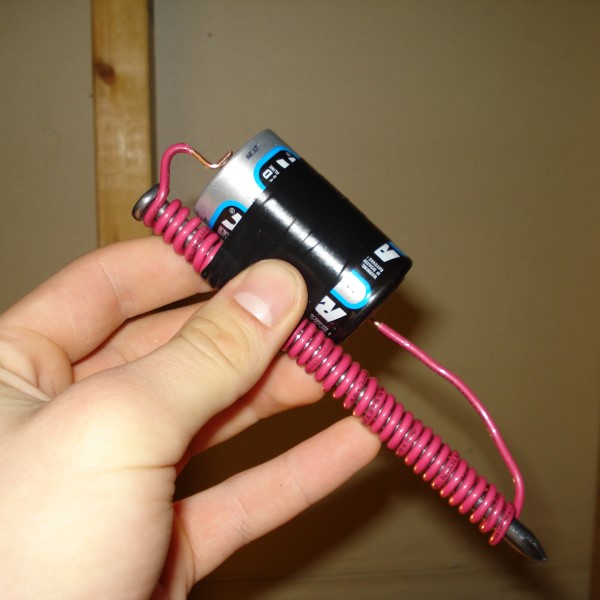
How to make an electromagnet? Now, we reach the core of the project. Here is the detailed process. First, take your iron nail and clean it. It should be free of rust or grease. This ensures good contact with the wire. Next, take your wire. Leave about 8 inches of wire loose at one end. Then, start wrapping the wire around the nail. The coiling technique is crucial here. You must wrap the wire in a single direction. Do not crisscross the wires. Furthermore, wrap the coils tightly next to each other. The more organized the coil, the better the magnetic field.
Continue wrapping until you reach the other end of the nail. Then, you can wrap a second layer over the first. Remember to always wind in the same direction. If you change direction, the magnetic fields will cancel out. Consequently, your magnet will not work. Once you have wrapped enough wire, cut it. Leave another 8 inches loose at this end. Now, use your sandpaper or strippers. Remove the insulation from both loose ends. Expose about one inch of copper. Twist the strands to keep them neat. Your electromagnet is now physically ready. The next step involves connecting the power source.
Connecting the Power and Testing Your Device
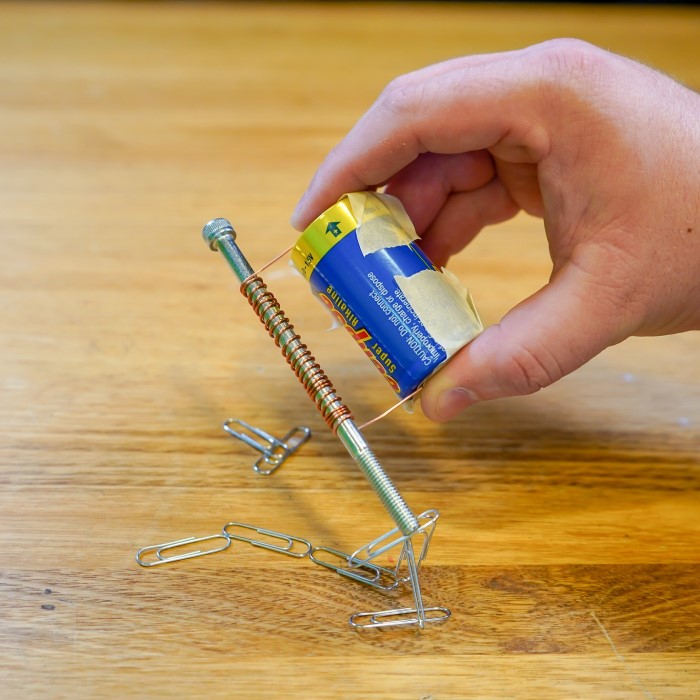
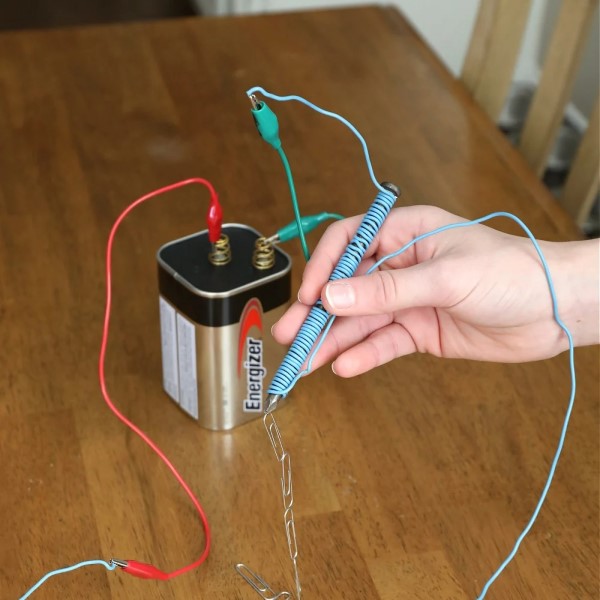
How to make an electromagnet? With the coil ready, it is time to bring it to life. Take one exposed wire end. Connect it to one terminal of the battery. You can use electrical tape to secure it. Then, take the other wire end. Touch it to the other battery terminal. Do not tape this connection permanently yet. The circuit is now complete. Current flows through the wire. Consequently, a magnetic field forms around the nail. To test it, bring the nail close to your paper clips. If you built it correctly, the nail will pick them up.
When you break the connection, the paper clips should fall. This demonstrates the non-permanent nature of the electromagnet. However, be careful during this step. The wire will get warm. This happens because the wire has resistance. The battery is short-circuited through the coil. This leads to rapid energy discharge. Therefore, do not connect the battery for long periods. Connect it only when you are testing. If the wire gets too hot, disconnect it immediately. Let it cool down before resuming. This safety precaution prevents burns and battery damage. Successful testing confirms your design works. You can now move on to optimization.
Proven Techniques for Enhancing Magnetic Power
How to make an electromagnet? Building a basic electromagnet is easy. However, building a powerful one requires strategy. There are three main ways to increase the strength. First, you can increase the number of coils. The magnetic field strength is directly proportional to the number of turns. More turns mean a stronger field. Therefore, keep adding layers of wire. Second, you can increase the current. The magnetic field is also proportional to the current. You can do this by using a higher voltage battery. Alternatively, you can use thicker wire. Thicker wire has less resistance. Consequently, more current flows for the same voltage. Third, you can improve the core material. Use a larger piece of iron. Or, use a core made of pure soft iron.
Some advanced hobbyists use ferrite cores. These materials have high permeability. Furthermore, ensure the core is fully inside the coil. Any part of the core sticking out is wasted potential. You can also experiment with the wire gauge. Thinner wire allows for more turns in a smaller space. However, it has higher resistance. Finding the balance is key. Try changing one variable at a time. This scientific method reveals which factor has the biggest impact.
Important Safety Precautions and Best Practices
Working with electricity always demands caution. While this is a low-voltage project, risks still exist. The primary risk is heat. As mentioned earlier, the wire acts as a short circuit. High currents generate significant heat. The coil can become hot enough to cause burns. Therefore, always hold the battery or wires by the insulated parts. Never touch the bare wire while the circuit is connected. Furthermore, monitor the battery. A rapidly discharging battery can leak or burst. If you notice the battery getting warm, disconnect it immediately. Additionally, be careful with the tools. The nail becomes a strong magnet. It can snap towards metal objects quickly. Keep it away from electronics.
For instance, keep it far from computers or smartphones. Magnetic fields can damage hard drives and screens. Another safety tip involves the wire ends. The exposed copper can be sharp. Handle them carefully to avoid cuts. Finally, if you smell burning plastic, stop immediately. This indicates the insulation is melting. A short circuit inside the coil is likely. Unravel the wire and check for damage. Safety should always be your top priority. A successful project is a safe project.
Troubleshooting Common Issues and Failures
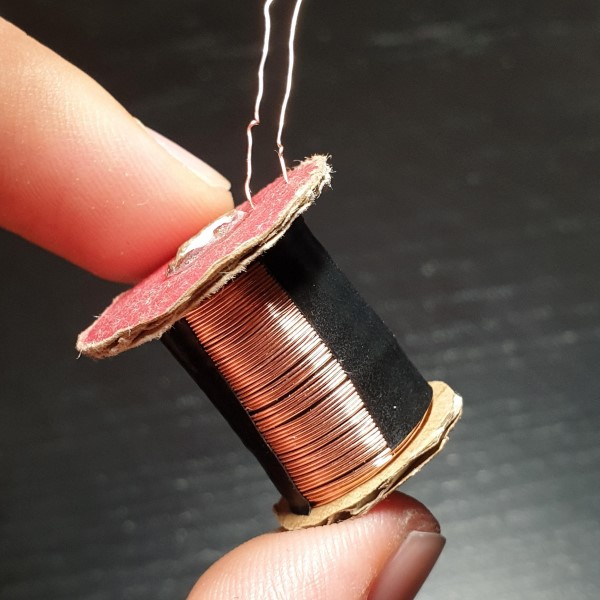
Sometimes, your electromagnet might not work. Do not get discouraged. Troubleshooting is part of the learning process. One common issue is a lack of magnetism. If the nail does not attract paper clips, check the connections. Are the wire ends stripped properly? Often, the enamel is not fully removed. Sand the ends more thoroughly. Another issue is a dead battery. Test your battery with another device. Furthermore, check the coil direction. Did you wind the wire in two different directions?
This cancels the magnetic field. You must unwind and rewind the coil. Another potential problem is a short circuit. If the wire is not insulated properly, the current bypasses the loops. It shorts directly across the battery. This results in heat but no magnetism. Inspect the wire for bare spots. Additionally, the core might be the problem. Is the nail made of aluminum or plastic? These materials are not magnetic. You must use iron or steel. Finally, consider the number of turns. A single layer might not generate enough force. Add more layers to boost the power. Go through this checklist systematically. You will likely find the solution quickly.
Real-World Applications of Electromagnetism
Electromagnets are not just for science fairs. They are vital to modern society. You interact with them every day. Consider the electric motor. It uses electromagnets to create motion. Fans, washing machines, and power tools all rely on this principle. Furthermore, look at maglev trains. These high-speed trains float above the track. Powerful electromagnets provide the lift and propulsion. Consequently, friction is eliminated. This allows for incredible speeds. Another major application is in recycling centers. Large electromagnets separate ferrous metals from trash. They can lift cars and heavy scrap metal. In the medical field, MRI machines use superconducting electromagnets.
These machines allow doctors to see inside the human body. Additionally, speakers and headphones use electromagnets. They convert electrical signals into sound waves. Even your doorbell uses an electromagnet to strike the bell. The list goes on and on. Understanding your small project connects you to these massive technologies. It demonstrates the scalability of the scientific principle. What starts as a nail and a wire can power a train. This perspective makes the project even more valuable.
Frequently Asked Questions
How to make magnetized water at home?
Magnetized water involves passing water through a strong magnetic field. You can place strong magnets on the outside of a water pipe or bottle. Some believe this changes the water structure. However, scientific evidence for health benefits is limited.
How do you make the strongest electromagnet?
To make the strongest electromagnet, maximize three factors. First, use the highest number of wire turns possible. Second, use a high-current power source safely. Third, use a soft iron core with high permeability. Combining these creates the most powerful magnetic field.
Conclusion and Final Thoughts
In conclusion, learning how to make an electromagnet is a rewarding journey. It combines theoretical physics with hands-on crafting. You start with simple materials like a nail and wire. Through the magic of science, you create a functional tool. We have explored the importance of coiling direction. We have also discussed the role of the iron core. Furthermore, you now know how to enhance the magnetic power. You can increase the turns or the current.
Always remember the safety precautions. Electricity is a powerful force that demands respect. Do not let the wire overheat. Always disconnect the battery when not in use. This project is more than just a school assignment. It is a fundamental building block of engineering. The principles you learned today apply to motors and generators. They power our modern world. We hope this guide has been helpful. Now, go and experiment. Try different core materials. Try different wire gauges. See how strong you can make your magnet. The world of electromagnetism awaits your exploration.