Introduction: The Joy of Holiday Lighting
As the holiday season approaches, many families take delight in decorating their homes, and Christmas lights play a pivotal role in this process. Learning how to draw Christmas lights can be a delightful way to capture the festive spirit in your artwork. Whether you’re preparing holiday cards, personalizing decorations, or merely honing your drawing skills, this guide will offer various techniques and unique styles for creating stunning representations of Christmas lights. Let’s embark on this creative journey and illuminate our own designs with festive cheer!
Understanding the Elements of Christmas Lights
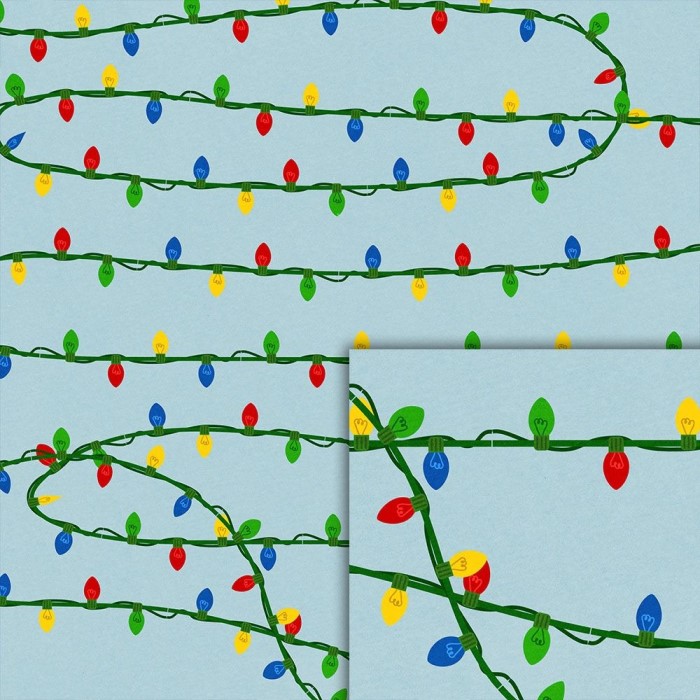
Before we begin drawing, it’s important to understand the different types of Christmas lights. Familiarity with these elements will help ensure accuracy in your drawings.
- Types of LED Lights: Modern Christmas lights often include LED lights, which are energy-efficient and long-lasting. Familiarizing yourself with their shape and brightness can aid in accurate portrayals.
- Classic Incandescent Bulbs: Many people still use traditional incandescent bulbs. These bulbs may have a classic rounded shape and can vary in size, giving an old-fashioned charm to holiday decorations.
- Light String and Placement: The strings that hold the bulbs are just as significant as the bulbs themselves. Understanding how the lights are arranged—whether tightly or loosely—affects your drawing style.
- Colorful Glow: Christmas lights come in a variety of colors. Pay attention to how colors blend and glow together, as capturing this aspect will enhance the realism of your artwork.
Essential Drawing Materials
Having the right tools on hand is pivotal for creating beautiful drawings of Christmas lights.
- Drawing Paper: Choose quality drawing paper suitable for your medium. If you plan to use markers, make sure the paper can handle ink without bleeding.
- Pencils: Use a variety of pencils for sketching. Start with an HB or 2B pencil for outlines, and you can switch to softer pencils (like 4B or 6B) for shading.
- Erasers: A good eraser is crucial for correcting mistakes or lightening areas. A kneaded eraser is especially helpful for precise adjustments.
- Coloring Tools: Depending on your preference, gather colored pencils, markers, or watercolor paints. Each medium offers different effects and textures.
- Ruler and Compass: If you want to create precise shapes or patterns, a ruler and compass can be useful for more structured designs.
Step-by-Step Guide: How to Draw Christmas Lights
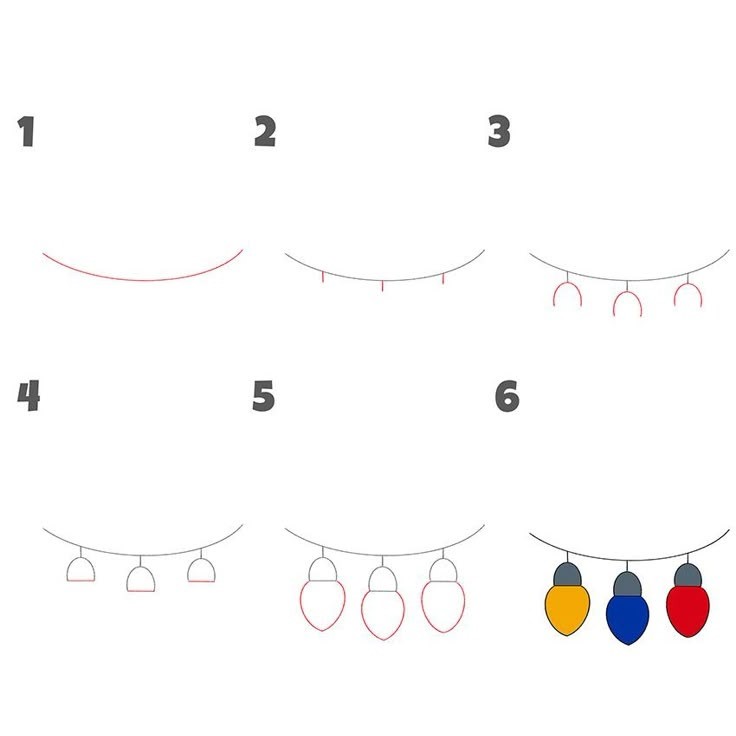
How to draw christmas lights? Now that you have your materials ready, here’s a step-by-step guide to help you draw Christmas lights.
Outline the Basic Shapes
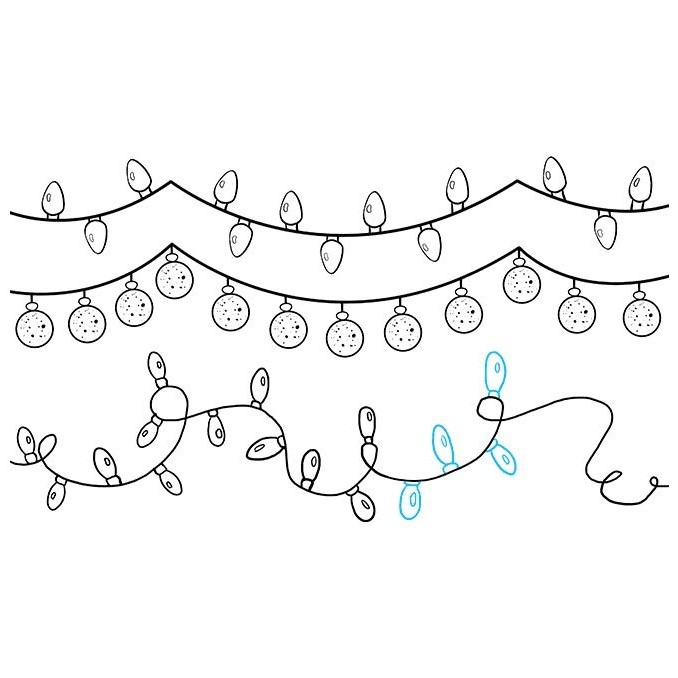
- Sketch the Bulbs: Start by lightly sketching the basic shapes of the lights. For mini lights, use teardrop shapes, and for larger bulbs like C7 or C9, use oval and rounded forms. Make sure to vary the sizes to add diversity to your design.
- Create the String: Draw curved lines to represent the string that holds the bulbs. Make the string look organic by giving it slight twists and turns, mimicking how lights naturally hang.
Adding Details to the Bulbs
- Define the Bulb Shapes: Refine the outlines of your bulbs, adding curves that give them dimensionality. Include small highlights to suggest reflection and depth.
- Connect the Bulbs: Note how each bulb connects to the string and draw small circles or shapes where this connection occurs. This adds realism to your drawing.
- Incorporate Light Effects: To create the illusion of glowing lights, draw lines radiating from each bulb to indicate light emanating.
Color Your Lights
- Choose a Color Palette: Decide on the colors you want to use for each bulb. Traditional colors include red, green, blue, and white, but feel free to mix it up with non-traditional shades for a fresh look.
- Layering and Blending: Start coloring each bulb with your base color, then add darker shades to create depth and shadows. Layering colors allows for richer, more vibrant lights.
- Using Highlights: Leave some parts of the bulbs white or very light to simulate the reflection of light. This technique gives bulbs a glossy, three-dimensional appearance.

Adding Background and Surrounding Elements
- Incorporate Seasonal Details: Consider adding holiday-themed elements like snowflakes, pine branches, or snowmen in the background. This gives context to your drawing and enhances visual appeal.
- Create a Festive Atmosphere: Use subtle colors or soft gradients in the background to reflect the warmth and coziness associated with holiday light displays.
- Introduce Layers: You can create depth in your artwork by layering objects and ensuring that foreground elements (like bulbs) are more vibrant than background ones.
Experimenting with Unique Styles
Once you’ve mastered the basics, don’t hesitate to explore various artistic styles when drawing Christmas lights.
Cartoon Style
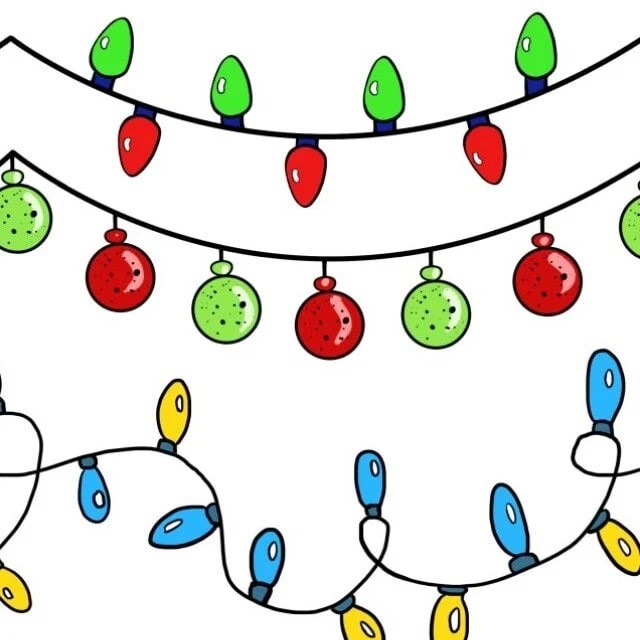
- Exaggerated Shapes: In cartoon style drawing, you can emphasize the shapes of the Christmas lights to create a fun and lively appearance. Use bold colors and round forms to make the bulbs look bigger and bouncier, giving them a joyful character.
- Bright Color Palette: Select bright and vibrant colors that stand out. Using a mix of saturated greens, reds, and yellows can evoke a festive atmosphere. This not only makes your drawing eye-catching but also creates a playful mood.
- Expressive Features: Consider adding facial features or expressions to the lights, such as smiling faces or wide eyes. This anthropomorphism enhances the whimsical aspect and engages viewers emotionally.
- Dynamic Composition: Create a lively scene by arranging your cartoon lights in various positions and orientations. Curved lines for the light string can mimic movement, making the drawing feel more dynamic and playful.
- Fun Patterns: Don’t hesitate to introduce patterns on the light bulbs, such as polka dots or stripes, to add more interest to your cartoon style. These additional elements contribute to the overall playful theme.
Realistic Drawing
- Intricate Shading: To achieve a lifelike representation of Christmas lights, focus on careful shading techniques. Use various pencil pressures or layering techniques with colored pencils to create shadows and highlights that reflect the way light interacts with surfaces.
- Capturing Reflections: Pay attention to how light reflects off different surfaces. In realistic drawings, captures the subtle reflections on the bulbs and the glow emitted by them. This detail adds complexity to your artwork and makes it appear more authentic.
- Texture Details: Consider the textures involved, like the smooth surface of a glass bulb or the roughness of a wire. Incorporating these textures can elevate your drawing, adding depth and realism to every component.
- Layering Colors: When coloring, use multiple layers of shades to replicate the way shadows and highlights work on real lights. Gradually blending colors can enhance the three-dimensionality of your lights.
- Background Context: Set your lights within a realistic context, such as against a holiday tree or in a nighttime setting. The background should complement the subject, enhancing the overall realism of your composition.
Abstract Designs
- Non-Representational Shapes: In abstract design, break away from realistic shapes and focus on creating more whimsical, non-traditional forms. You might use circles, wavy lines, or geometric patterns that evoke the idea of Christmas lights without directly depicting them.
- Color Symbolism: Use colors symbolically rather than accurately. For instance, utilizing vibrant reds and greens in unusual patterns can convey the holiday spirit even if the design doesn’t represent traditional lights.
- Emotional Expression: Allow your personal feelings and emotions about the holiday season to influence your abstract design. This could lead to a drawing that reflects joy, nostalgia, or warmth without explicit forms.
- Layering and Overlapping: Explore overlapping shapes and layers of color to create depth. This technique can invoke movement and energy in your abstract composition, showcasing the festive nature of the lights.
- Breaking Rules: Embrace freedom in your creative process. Abstract design encourages breaking artistic norms, so feel free to experiment with colors, shapes, and placements that might not traditionally go together.
Mixed Media Techniques
- Combining Materials: Mixed media drawing allows for experimentation with various materials to achieve unique visual effects. By integrating colored pencils, paints, markers, and other mediums, you can enrich your artwork with textures and depth.
- Using Colored Pencils: Start with colored pencils for the Christmas bulbs. Their precision allows for detailed coloring, blending, and shading, making the lights look vibrant and full of life.
- Incorporating Watercolor: Use watercolors in the background to create a soft, fluid effect. Watercolors can simulate the glow of the lights and create a dreamy atmosphere that complements the sharpness of the colored pencil drawing.
- Layering Techniques: When using mixed media, layer your colors. Apply a base layer with watercolors and use colored pencils on top to add detail and texture.
- Textured Backgrounds: Experiment with different textures in the background, such as using sponges or brushes to apply paint for clouds or a night sky. This adds depth and interest, enhancing the focus on the Christmas lights.
Frequently Asked Questions
How to draw an easy Christmas light?
Begin by drawing a simple bulb shape, then add the string lightly. Color in with bright colors and use minimal shading to keep it simple and fun.
How to draw easy fairy lights?
Sketch small round bulbs along a wavy line. Focus on the placement and then practice coloring them in soft pastels for a charming look.
How to draw Christmas things easily?
Use simple geometric shapes as a base for your drawings. Break down each object (like trees or ornaments) into basic shapes before adding details.
How to paint a string of Christmas lights?
Outline the string and bulbs lightly first, then use watercolors or acrylics to fill in smoothly. Layer colors to create a glowing effect and enhance the bulbs.
Conclusion: Embracing Your Creativity
In conclusion, learning how to draw Christmas lights allows you to express your creativity and celebrate the holiday spirit. By following the step-by-step guide provided, along with experimenting with unique styles and techniques, you can create artwork that captures the joy of the holiday season.
Allow your imagination to flourish as you draw, paint, or sketch various designs. Whether you’re creating festive cards, decorating ornaments, or simply indulging in a fun activity, remember that there are no limits to your creativity. Embrace this joyous time with artistic expression, and let your drawings shine as brightly as the Christmas lights themselves!